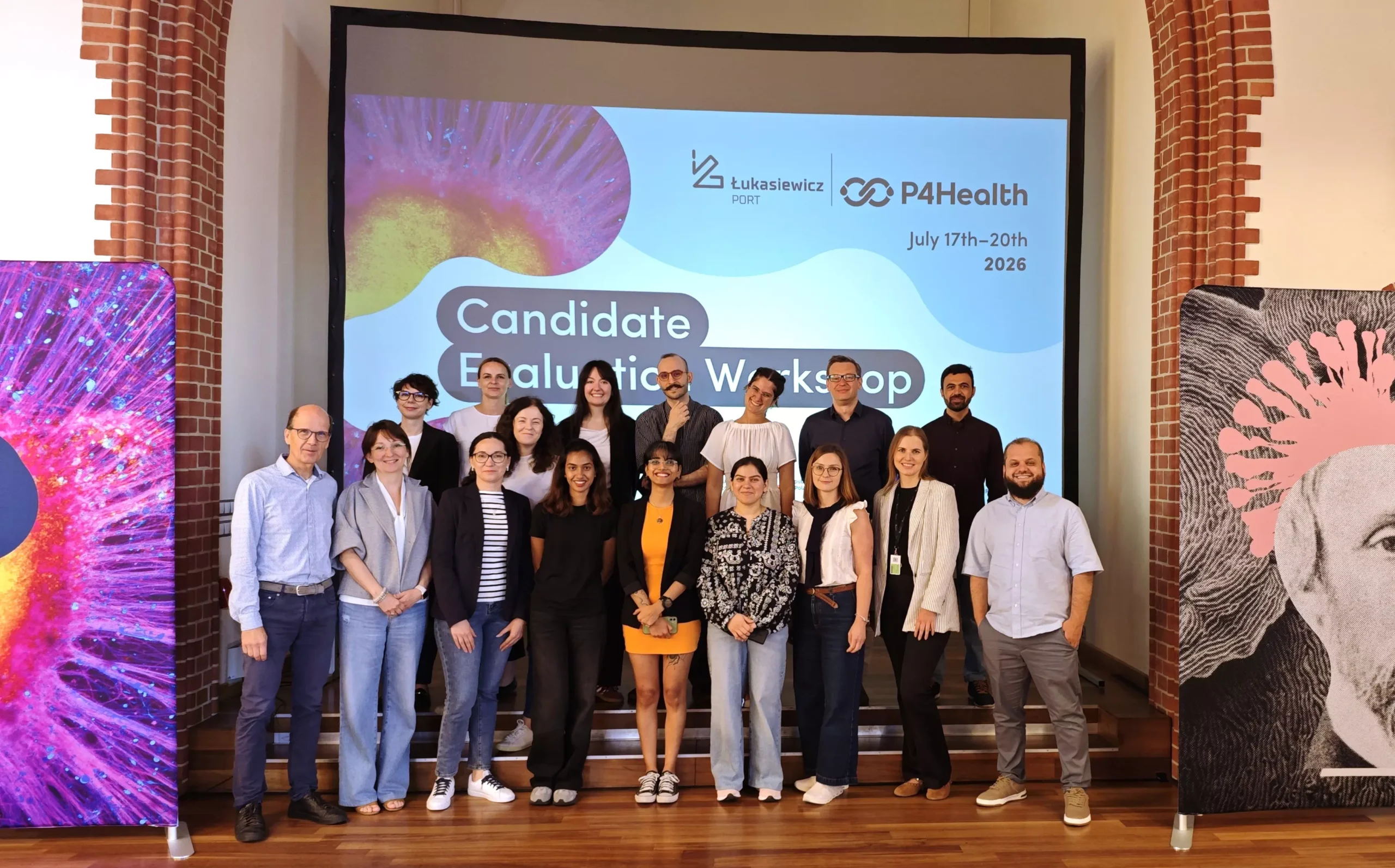
Building a Center of Excellence requires more than bringing together researchers with strong individual scientific records. It also depends on the ability to formulate rigorous research questions, develop feasible experimental strategies, work across disciplinary boundaries and build research teams capable of pursuing a shared scientific agenda. These dimensions were at the centre of the Candidate Evaluation Workshop organised as part of the selection process for future Group Leaders and Postdoctoral Researchers at P4Health.
Held from 17 to 20 July 2026 and hosted by Łukasiewicz – PORT, the workshop brought together 15 candidates: five candidates for Group Leader positions and ten Postdoctoral Researcher candidates. The event formed an important stage of the evaluation process for researchers who may contribute to the development of the P4Health Center of Excellence for Precise Phenotyping and BioDataBanking. Its format was designed to examine candidates not only through individual presentations and interviews, but also through scientific discussion, interdisciplinary project development and team-based problem solving.
From research vision to a feasible project
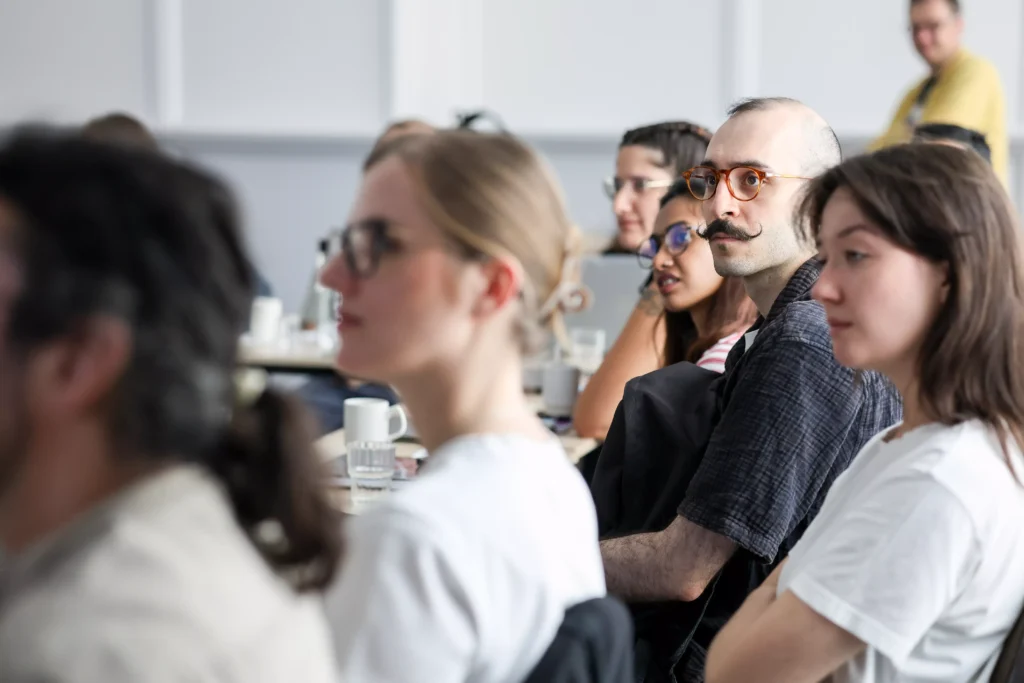
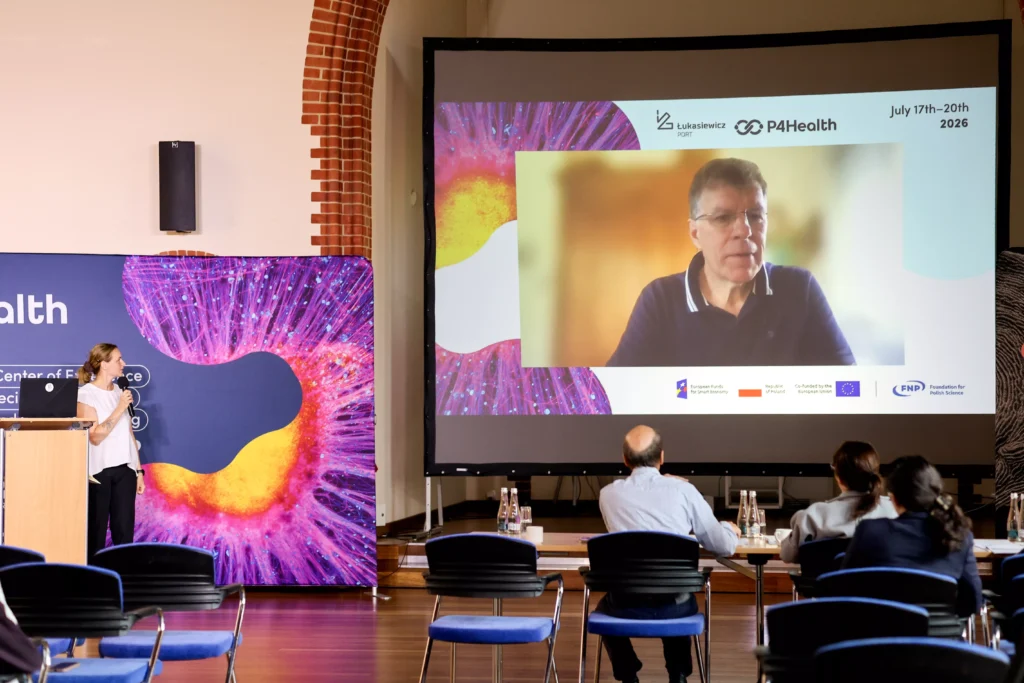
The workshop began with individual presentations. Group Leader candidates presented their project proposals in the format “My Life – My Work – My Passion”, followed by questions and discussion. Postdoctoral candidates introduced their scientific interests through shorter “My Life – My Passion” presentations. This first stage provided an opportunity to discuss research ideas, scientific experience and the perspectives that candidates could bring to future P4Health teams.
The following stages shifted the emphasis from individual presentations to collaborative research work. Candidates were assigned to interdisciplinary teams and asked to develop a project roadmap. Each team had to select an experimental approach and translate its scientific concept into a realistic plan consisting of work packages and milestones. Importantly, the roadmap was expected to incorporate the scientific expertise of all team members. The exercise therefore connected scientific reasoning with experimental design, project feasibility and the practical challenge of integrating complementary expertise around a common research question.
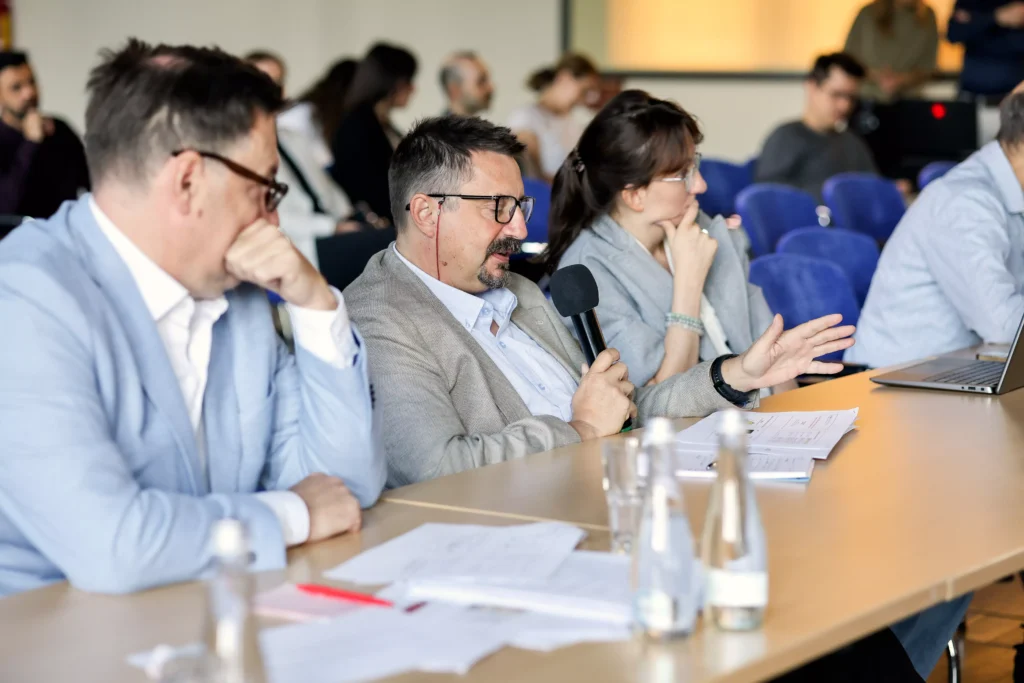
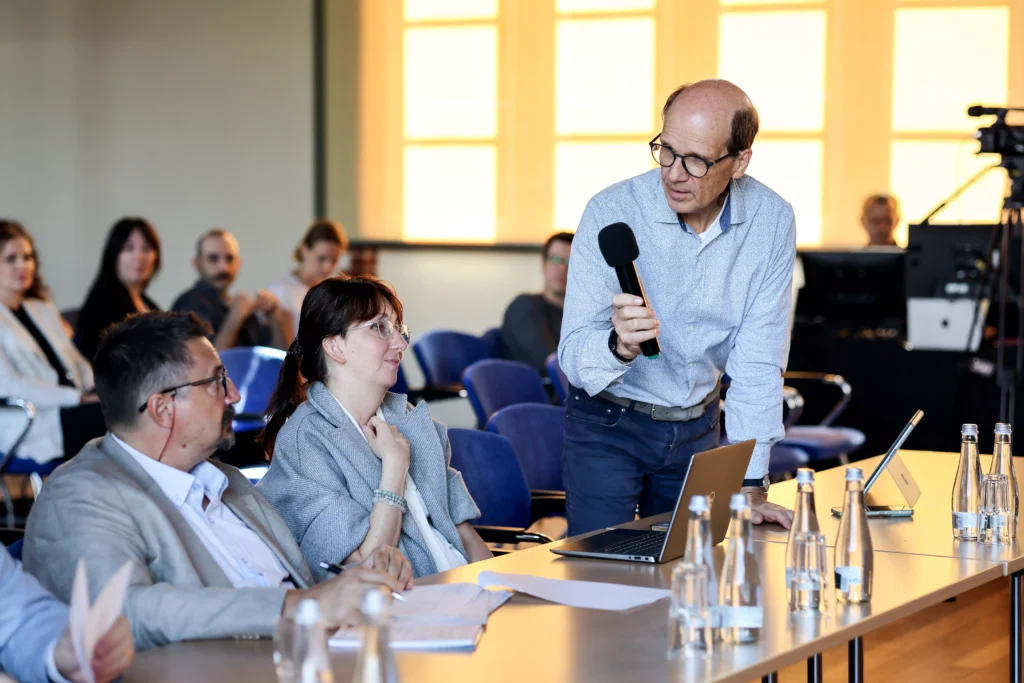
Teams subsequently developed the storyline and rationale for their projects, including the introduction and conclusions as well as the reasoning behind the proposed approach. They then prepared presentations through dry-run sessions followed by extensive questions and feedback. This iterative process required candidates to explain scientific choices, respond to critical discussion and refine their proposals before the final presentation.
Evaluating research in a collaborative setting
The workshop format provided a broader perspective on candidates than can be obtained from scientific outputs alone. By combining individual presentations with several days of collaborative project work, it made it possible to observe how researchers approached scientific problems, contributed to group discussions and developed a research strategy together with colleagues from different backgrounds. The process also showed how candidates translated research ideas into experimental plans and how they responded when those plans were examined through questions and feedback.
For candidates considered for Group Leader roles, these activities were complemented by individual interviews on the final day of the workshop. Their prospective responsibilities make the ability to articulate a research direction, make methodological and strategic decisions, and work constructively with other researchers particularly relevant to the development of future research groups. The workshop did not treat interdisciplinary collaboration as an abstract objective: candidates had to apply it directly while designing a project that combined the expertise available within their teams.
The final team presentations took place at Łukasiewicz – PORT and were delivered to the jury, with the P4Health International Scientific Committee participating in the concluding assessment. Each presentation was followed by a question-and-answer session, after which the programme continued with Group Leader interviews and a jury meeting devoted to discussion and selection. In this way, the evaluation process connected scientific merit with the practical ability to develop and communicate a coherent research concept in a collaborative environment.
This approach is closely related to the type of research environment being developed within P4Health. The Center of Excellence brings together interdisciplinary and translational research with the broader objective of advancing predictive, preventive, personalized and participatory medicine. Precise phenotyping and biodatabanking require scientific questions to be addressed across methodological and disciplinary boundaries, making collaboration, experimental rigor and the capacity to connect different areas of expertise important elements of future research activities.
The workshop also created space for scientific exchange among candidates. Reflecting on the discussions that developed during the event, Prof. Bastian Hengerer, Director of the P4Health Center of Excellence, noted: “It was a pleasure to see how the discussions and collaborations evolved. I was particularly impressed by the open, constructive, and inspiring atmosphere that developed throughout the workshop.”
By combining individual scientific assessment with collaborative project development, presentations, feedback and interviews, the Candidate Evaluation Workshop supported a selection process focused on the way researchers think, work and develop research strategies in practice. Its role extends beyond assessing individual expertise: it contributes to building research teams able to combine complementary competences and pursue the interdisciplinary and translational scientific agenda of P4Health.